Malibu house no.4
Malibu, CaliforniaPrivate Residence
This home was designed as a living instrument. A place that adjusts continuously to light, weather, and daily life.
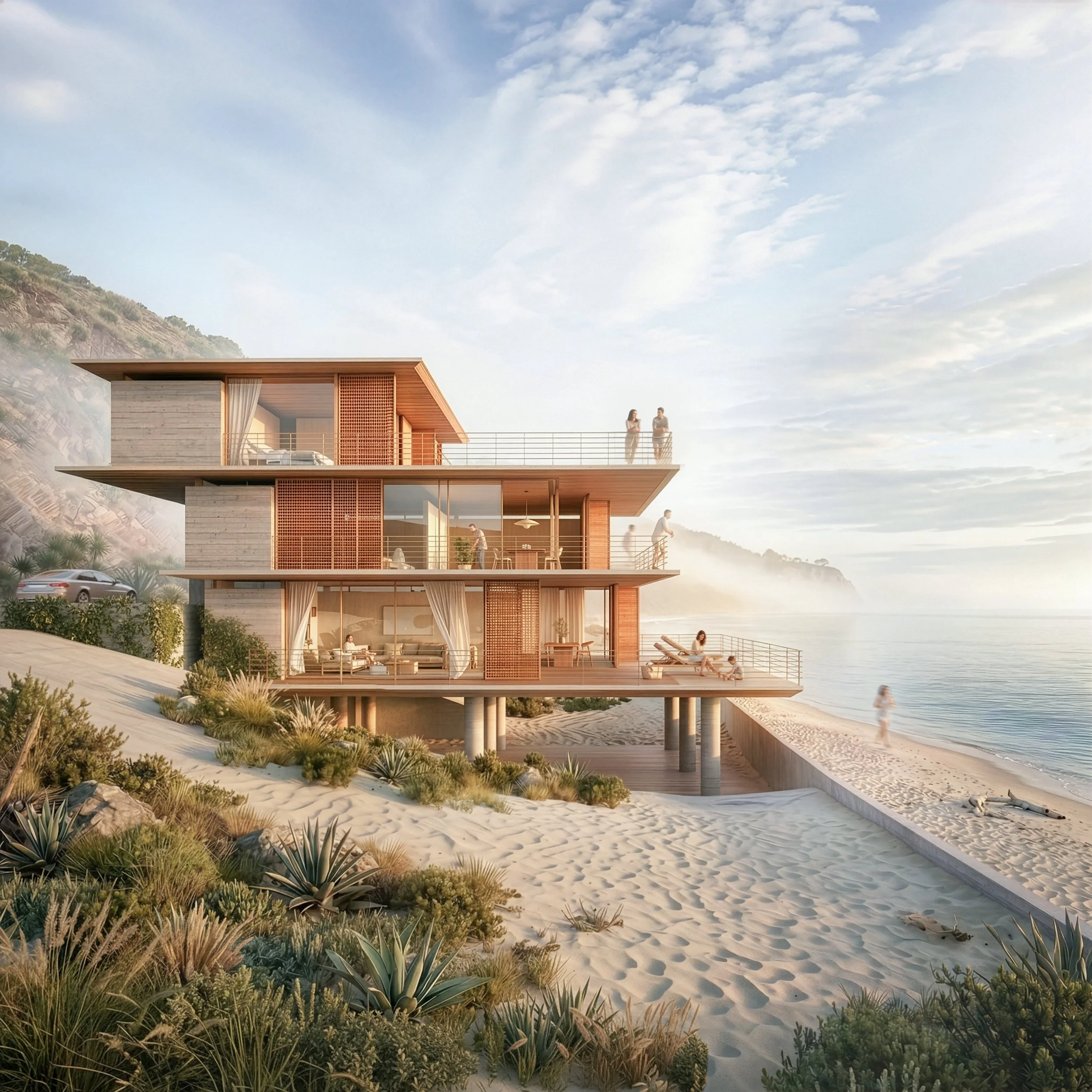
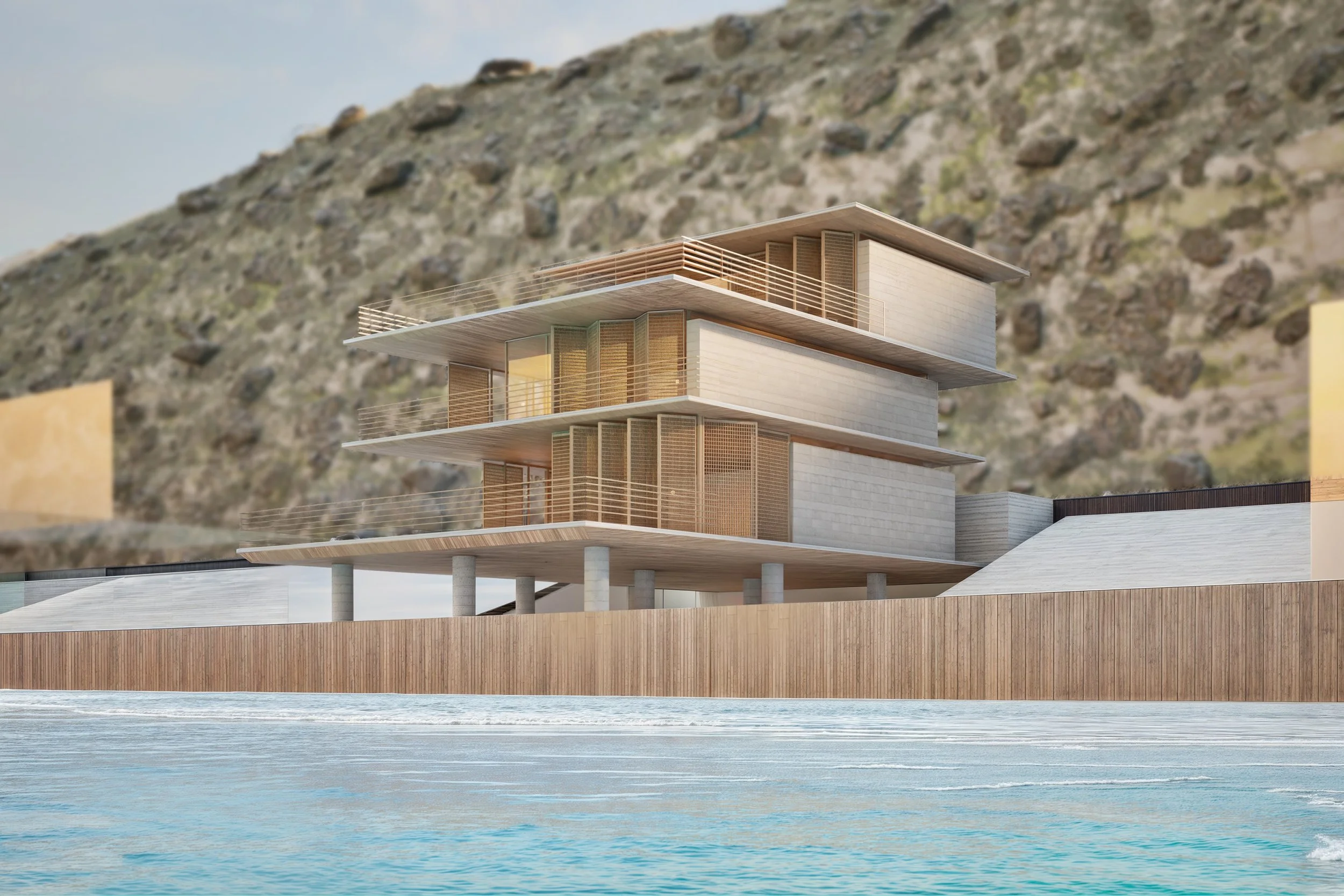
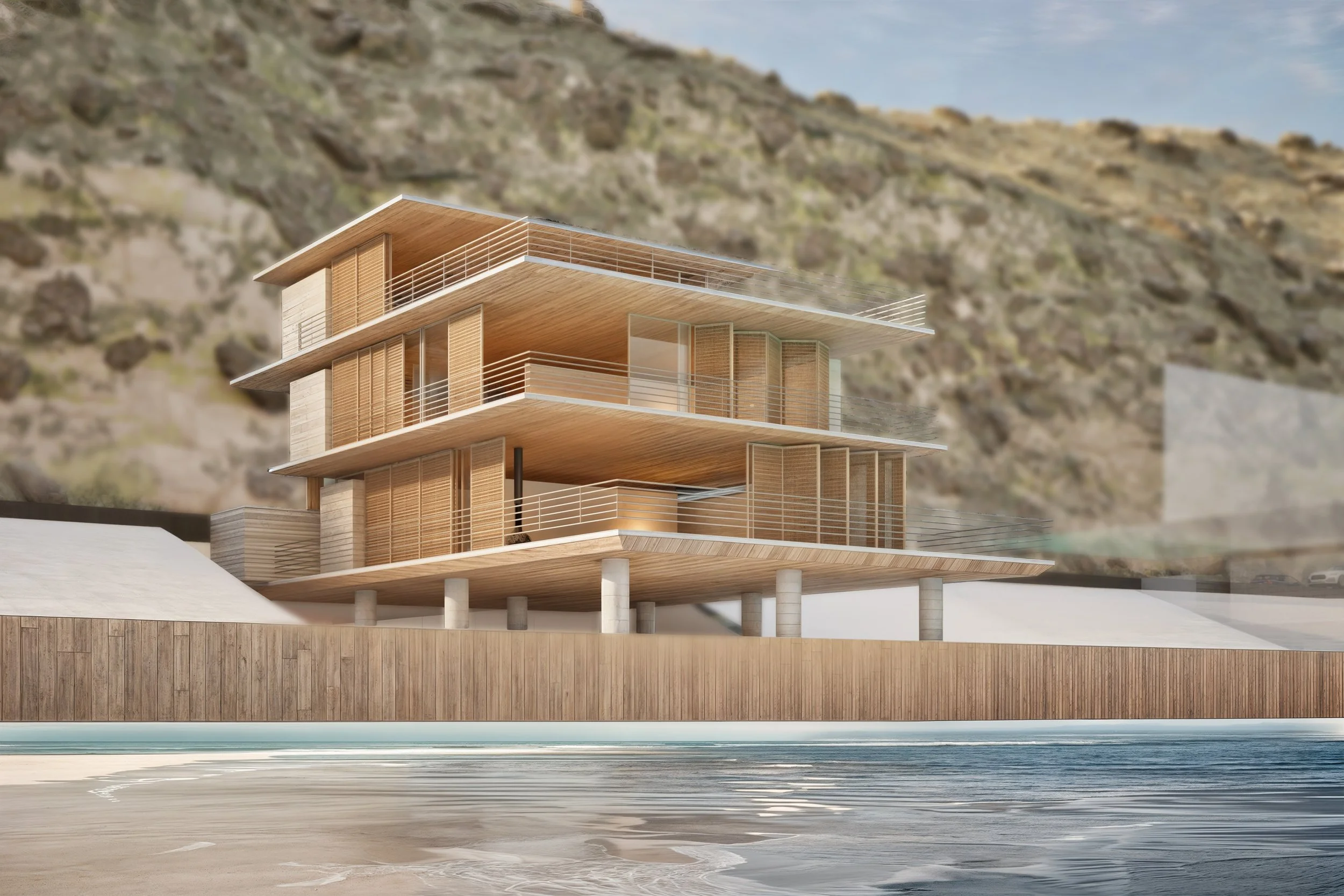
Set between the Pacific and the hillside, the architecture responds to Malibu’s conditions not through a single gesture, but through layers. Deep floor plates, generous overhangs, and operable wood screens allow the house to open or close, soften or shelter, depending on season, time of day, and mood.
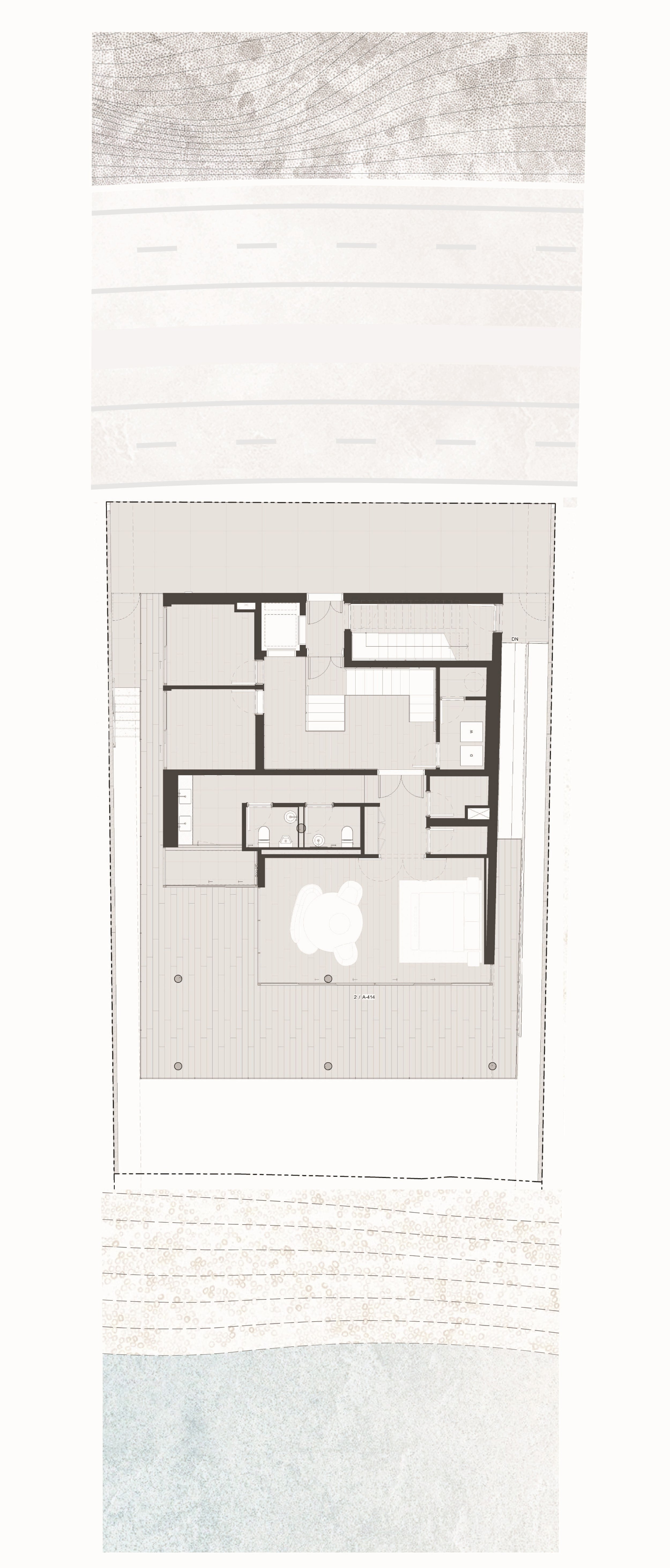
The building is composed as a series of stacked planes, each one extending outward to create shaded thresholds between inside and outside. These intermediate spaces are essential. They slow the transition from interior to landscape, allowing occupants to inhabit the edge rather than cross it abruptly.
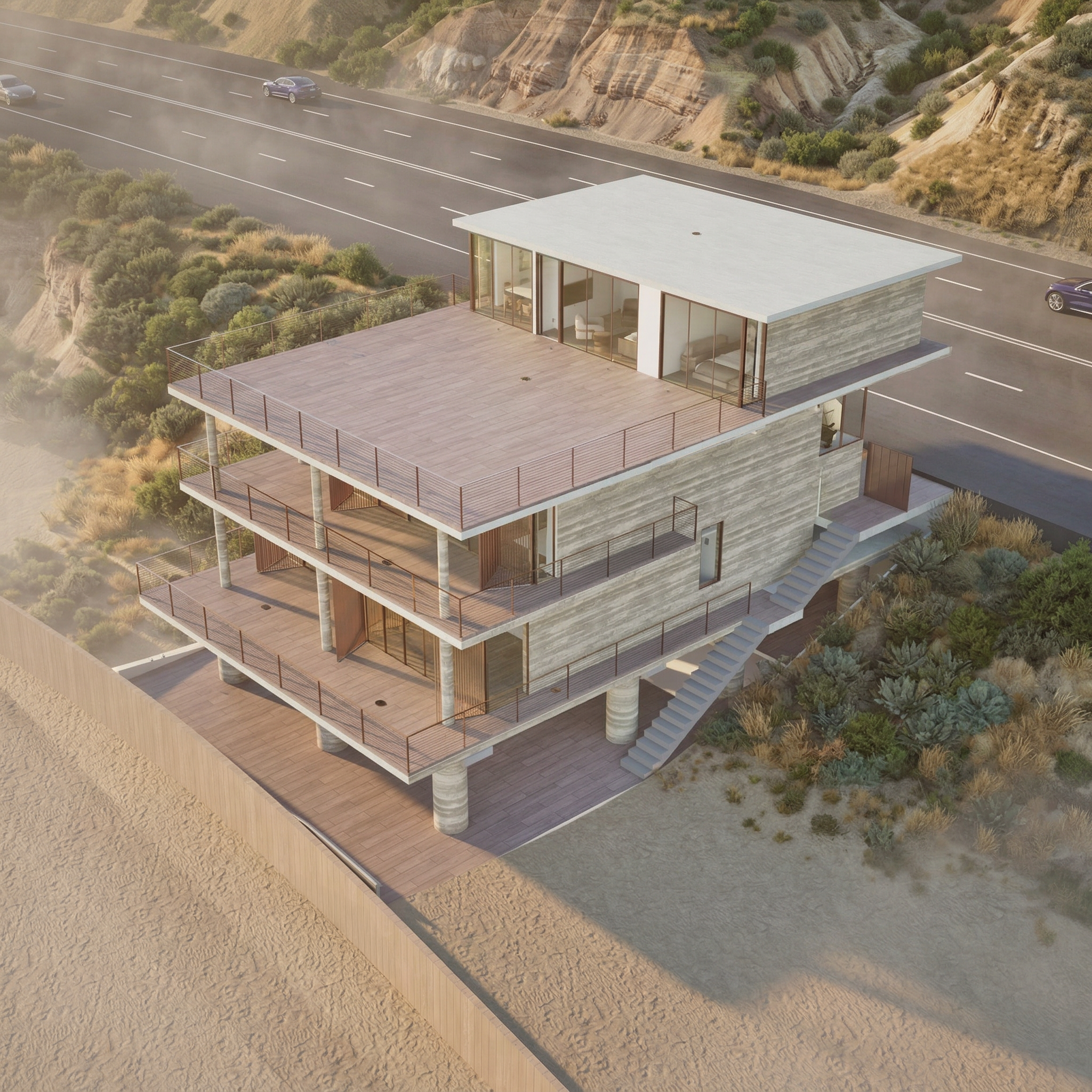
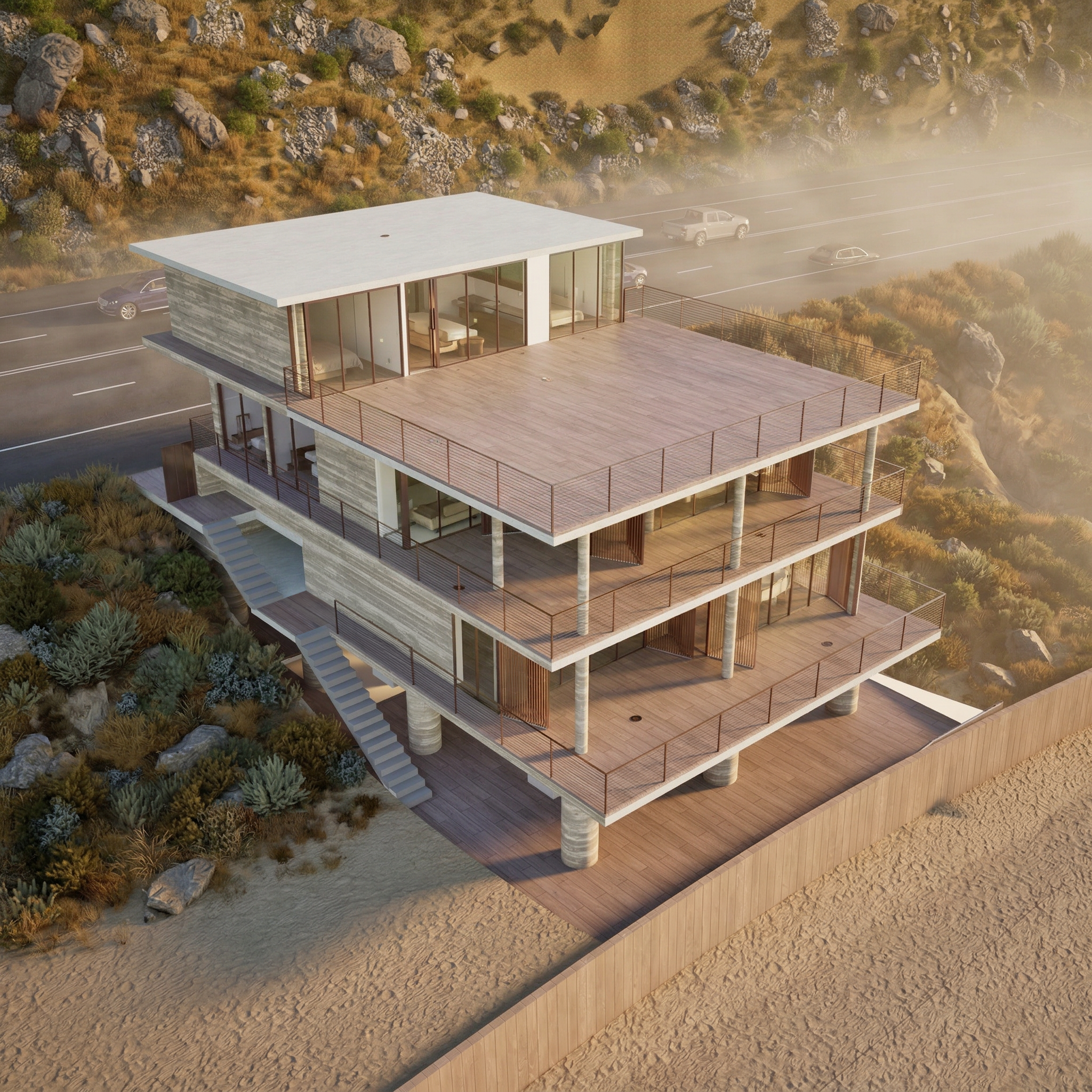
EXTERIOR RENDERING
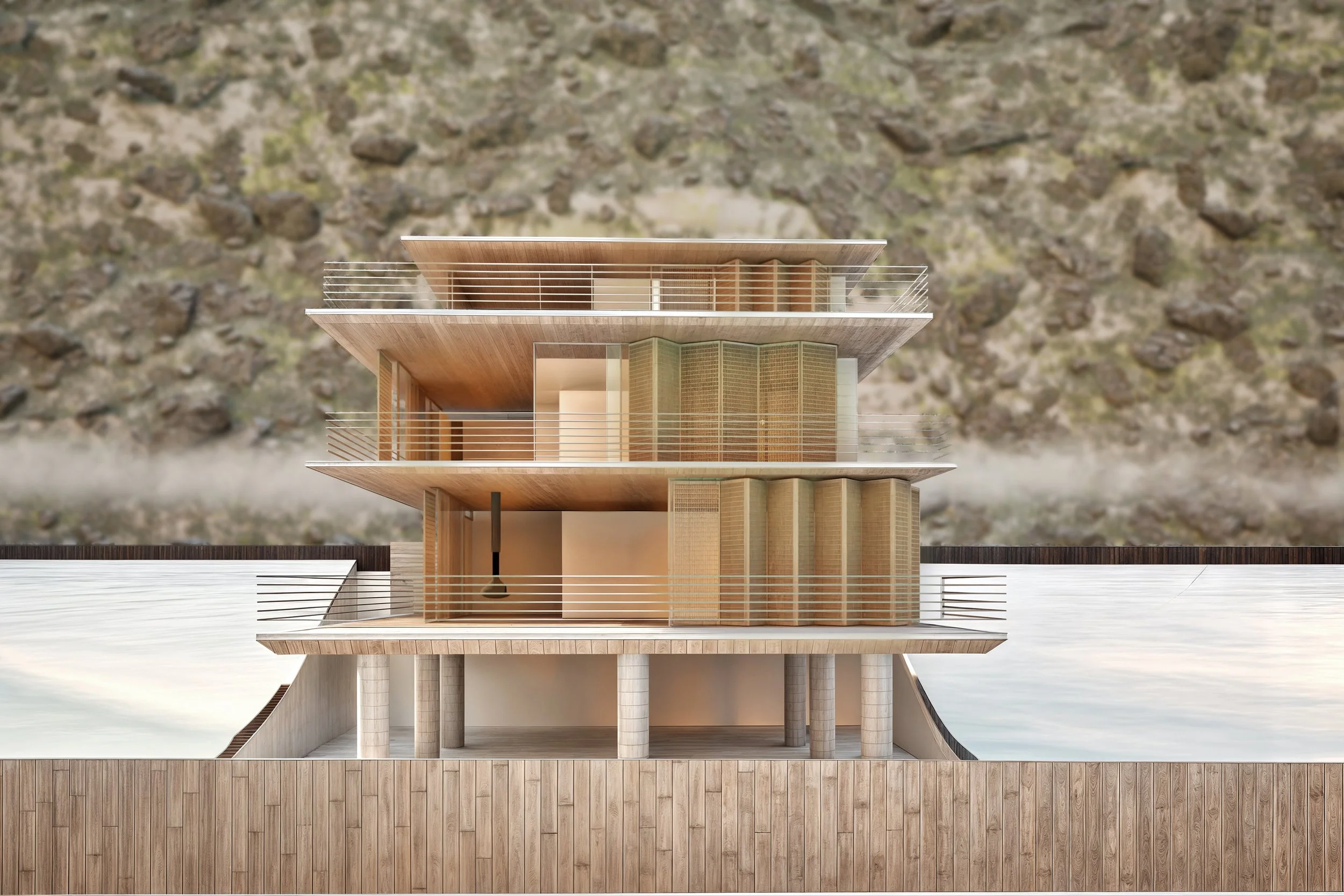
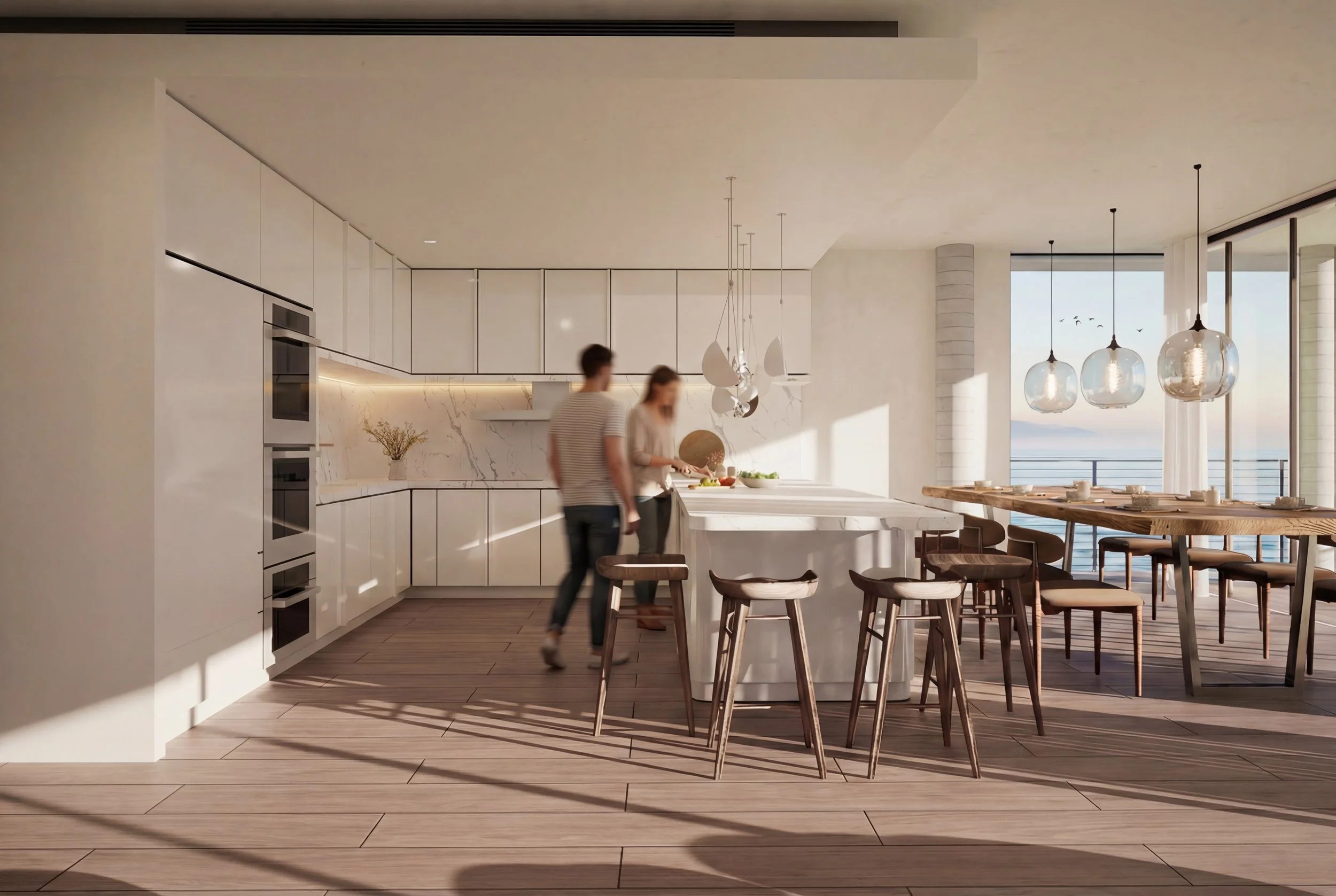
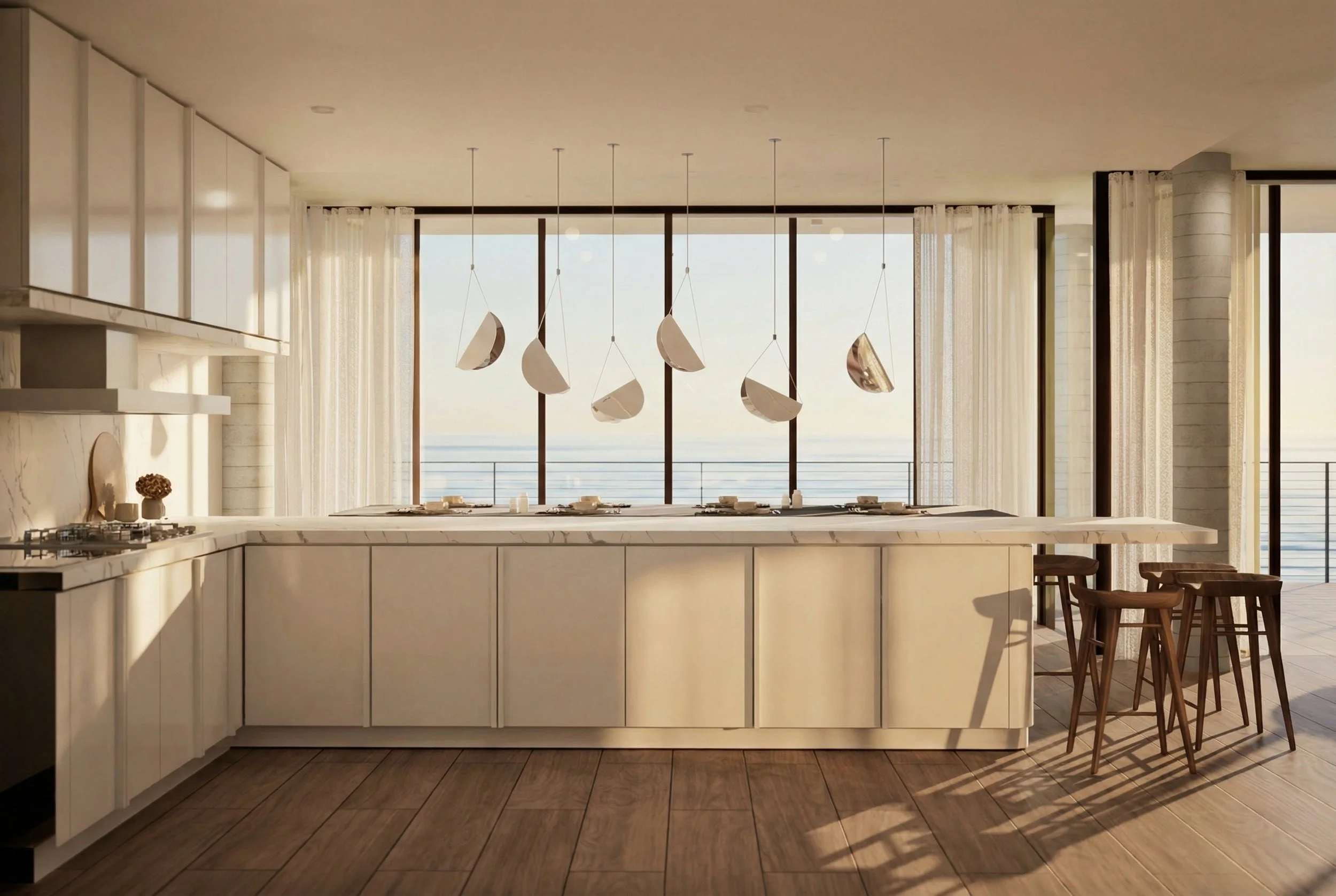
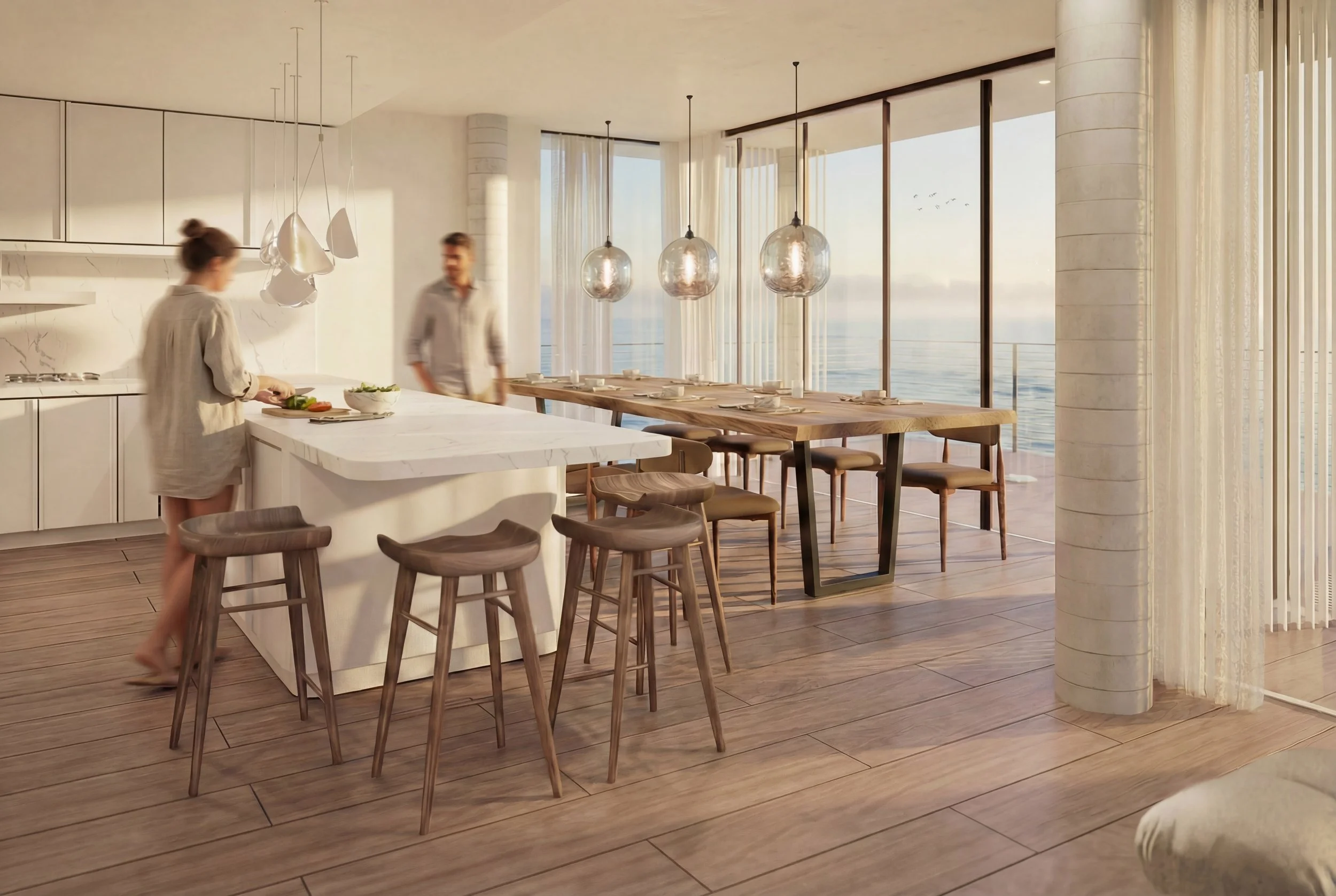
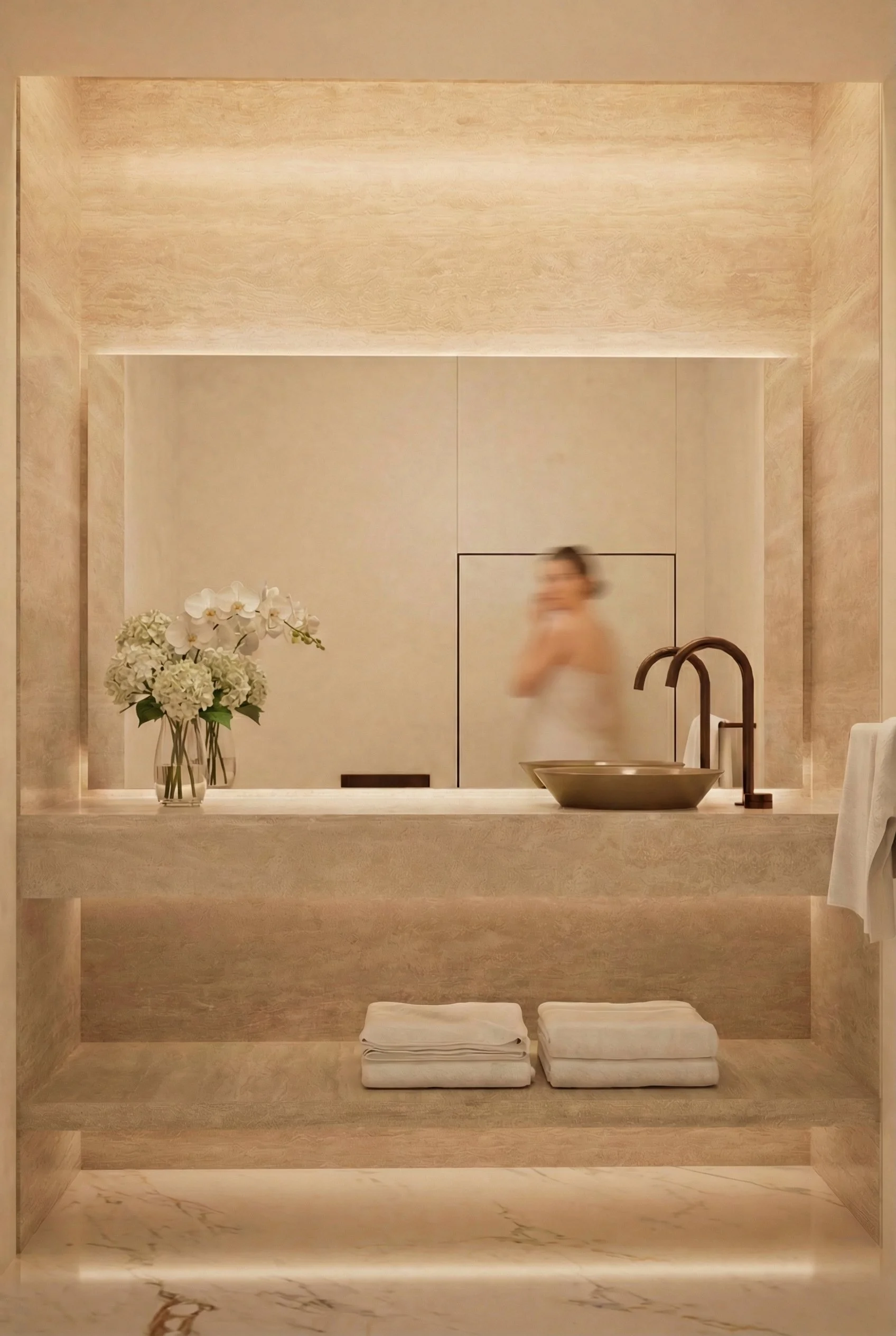
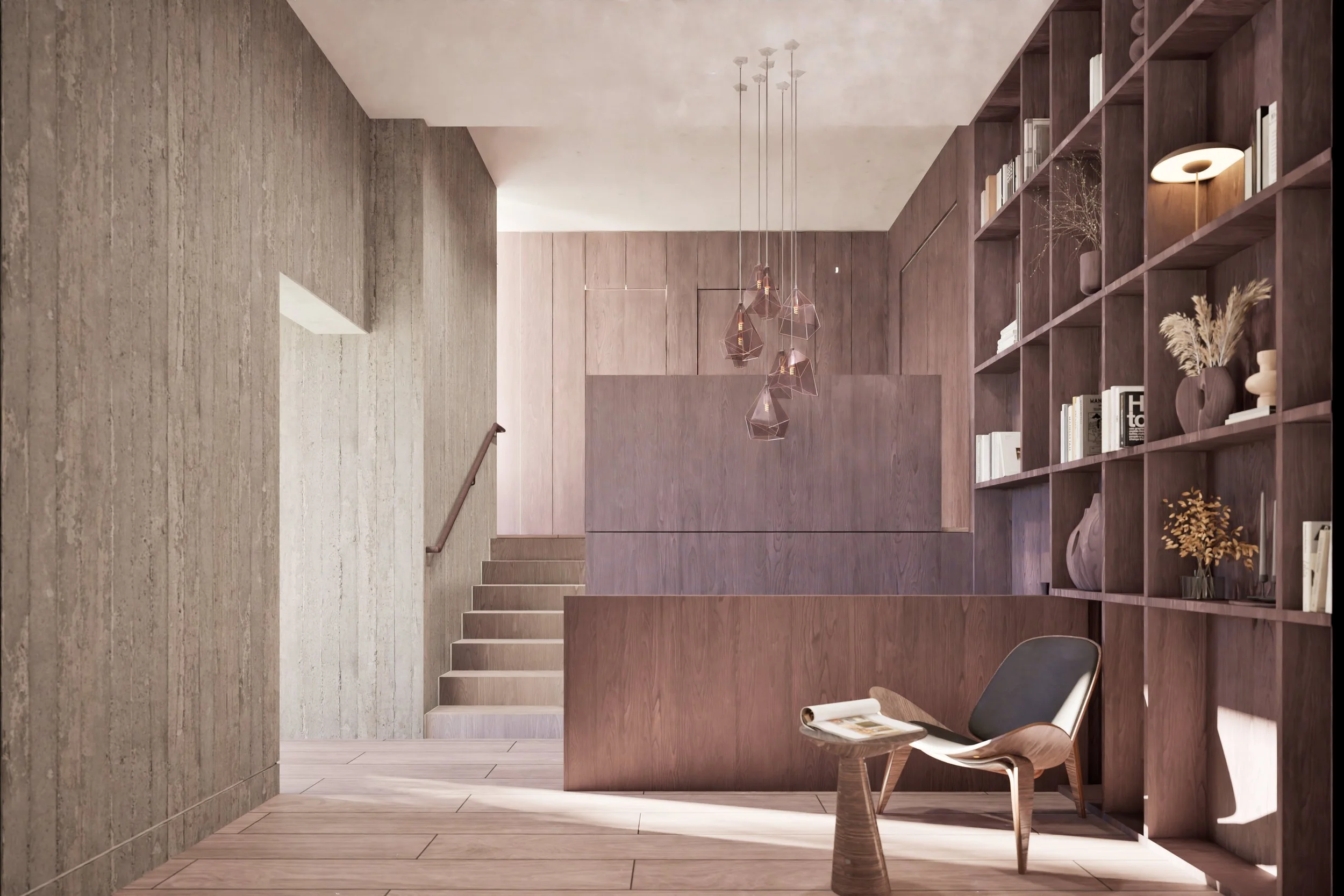
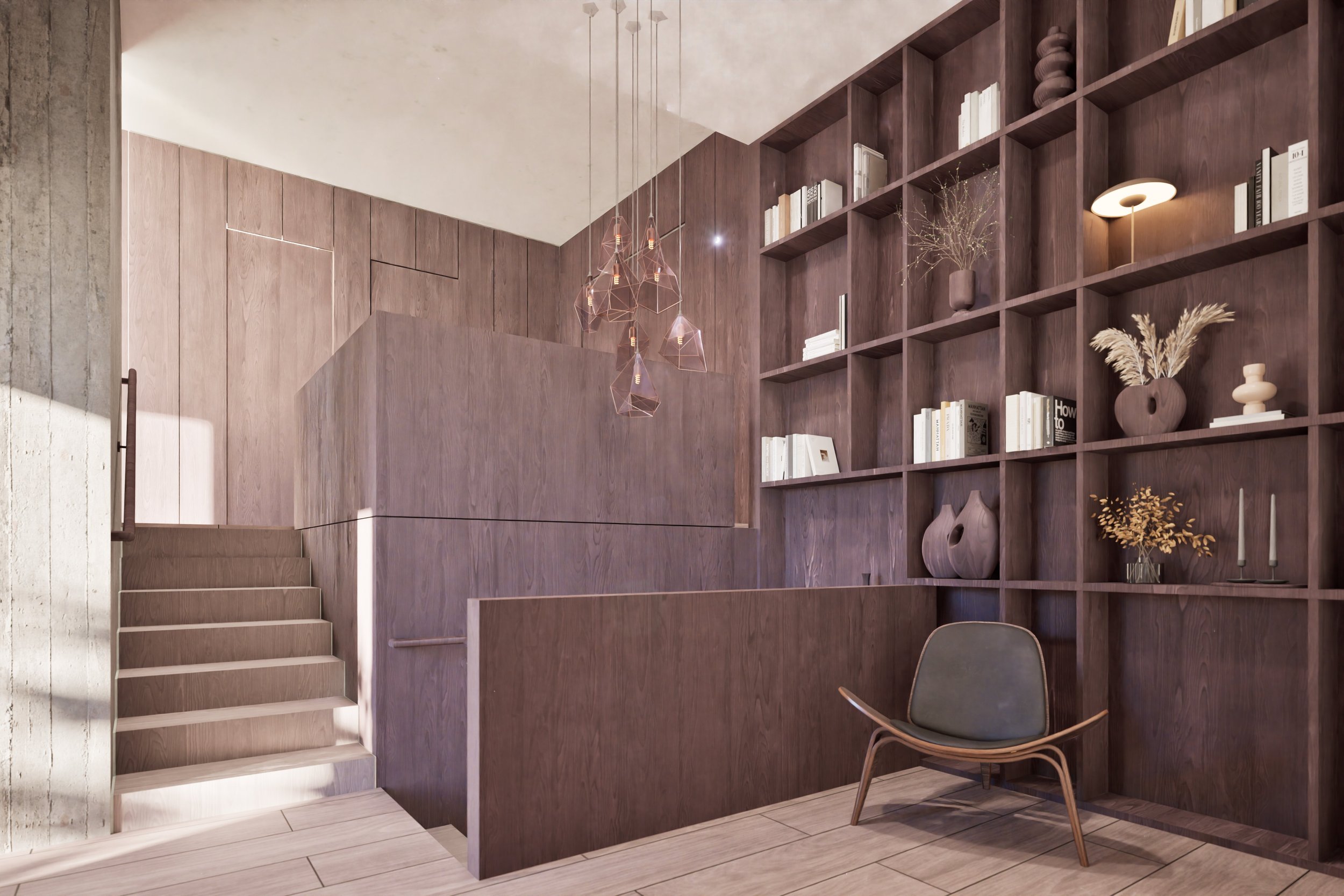
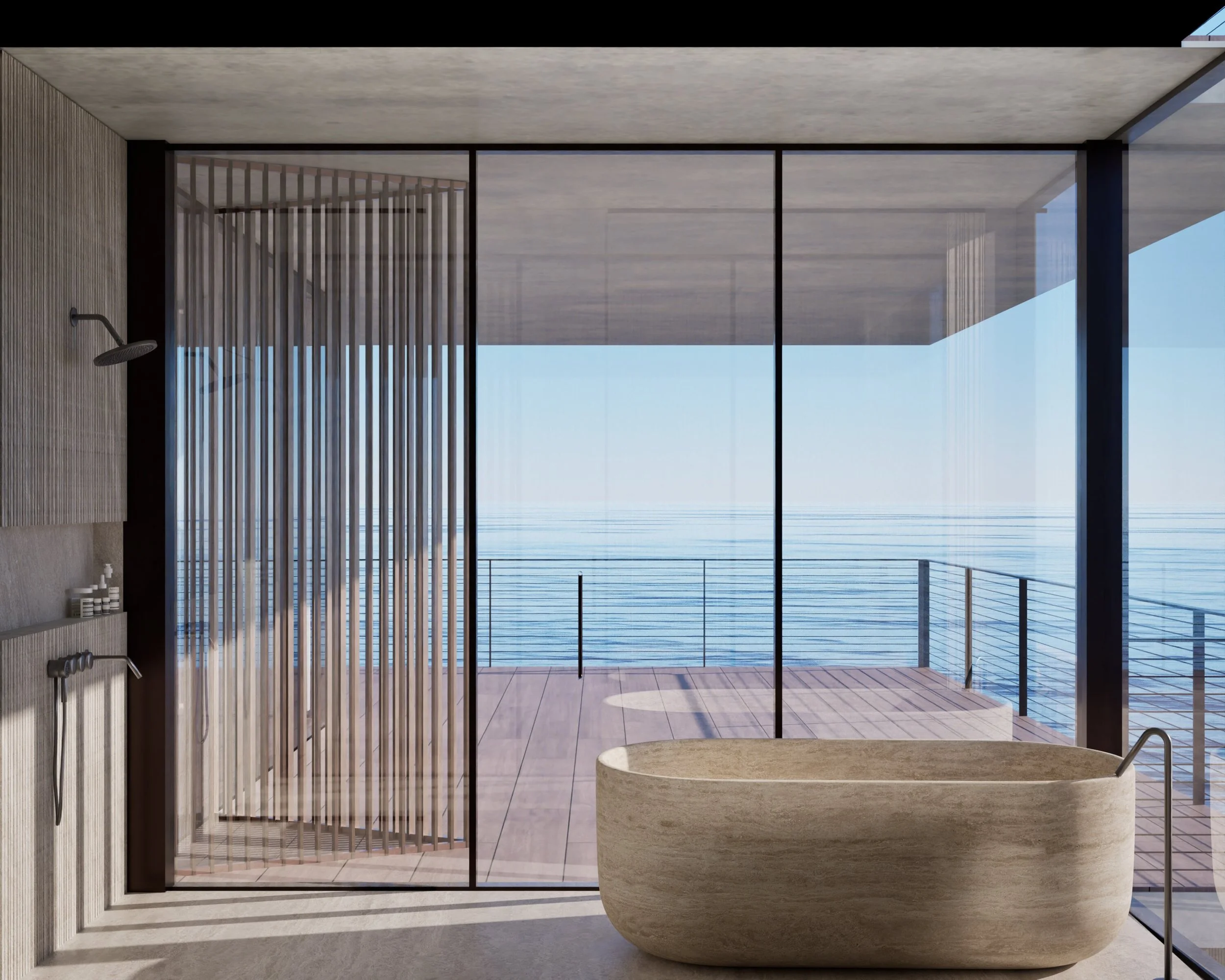
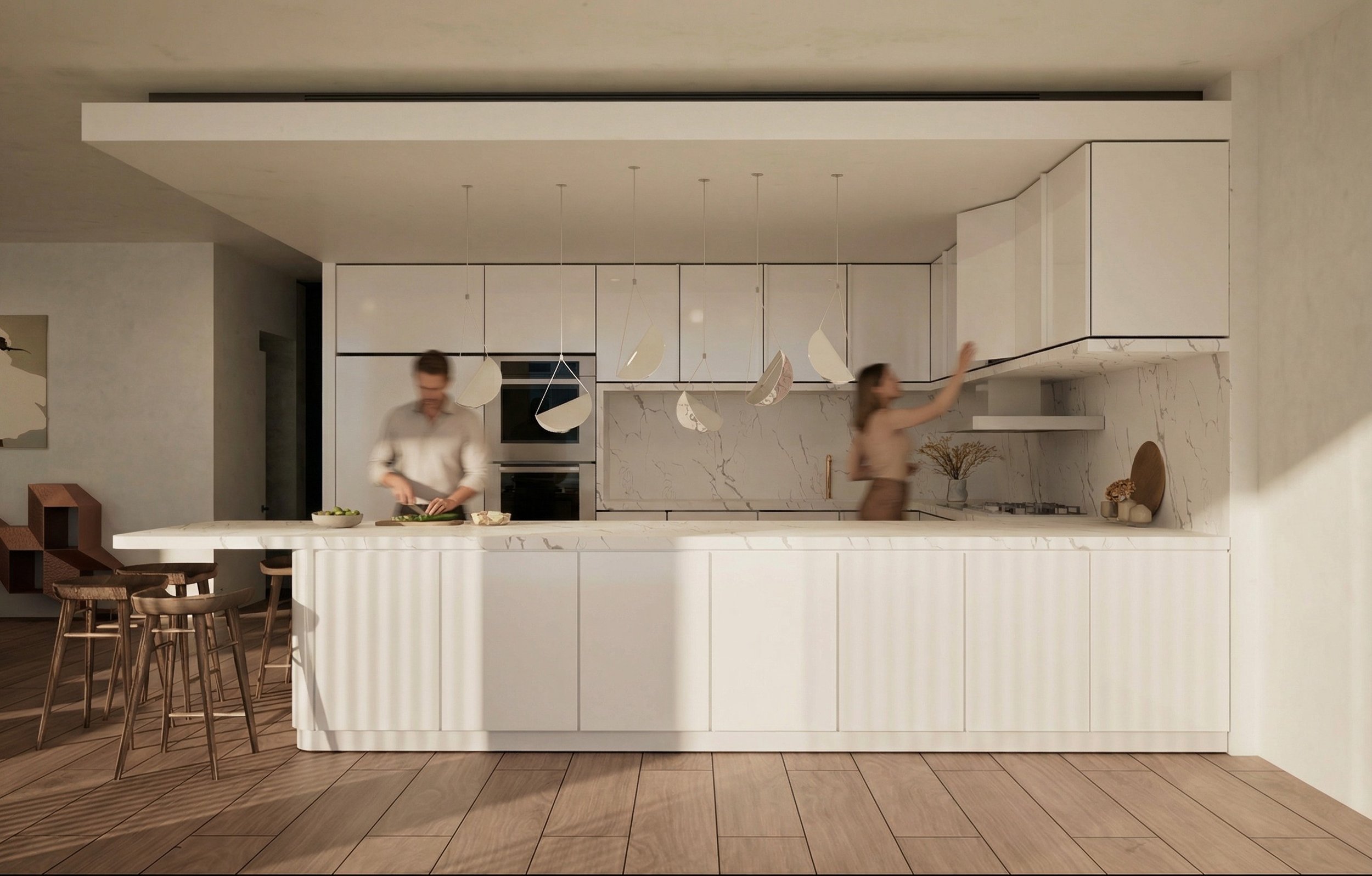
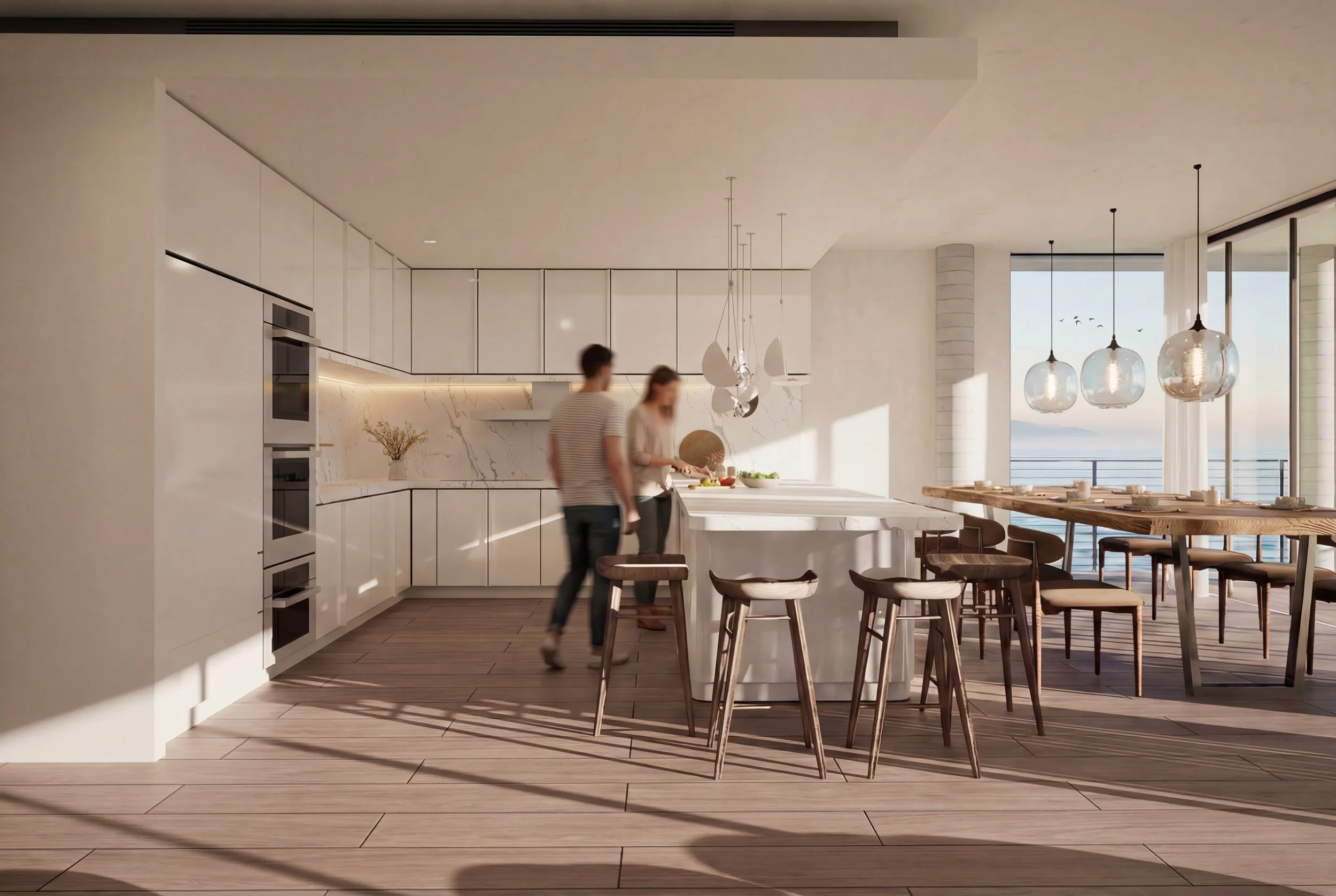
INTERIOR RENDERING
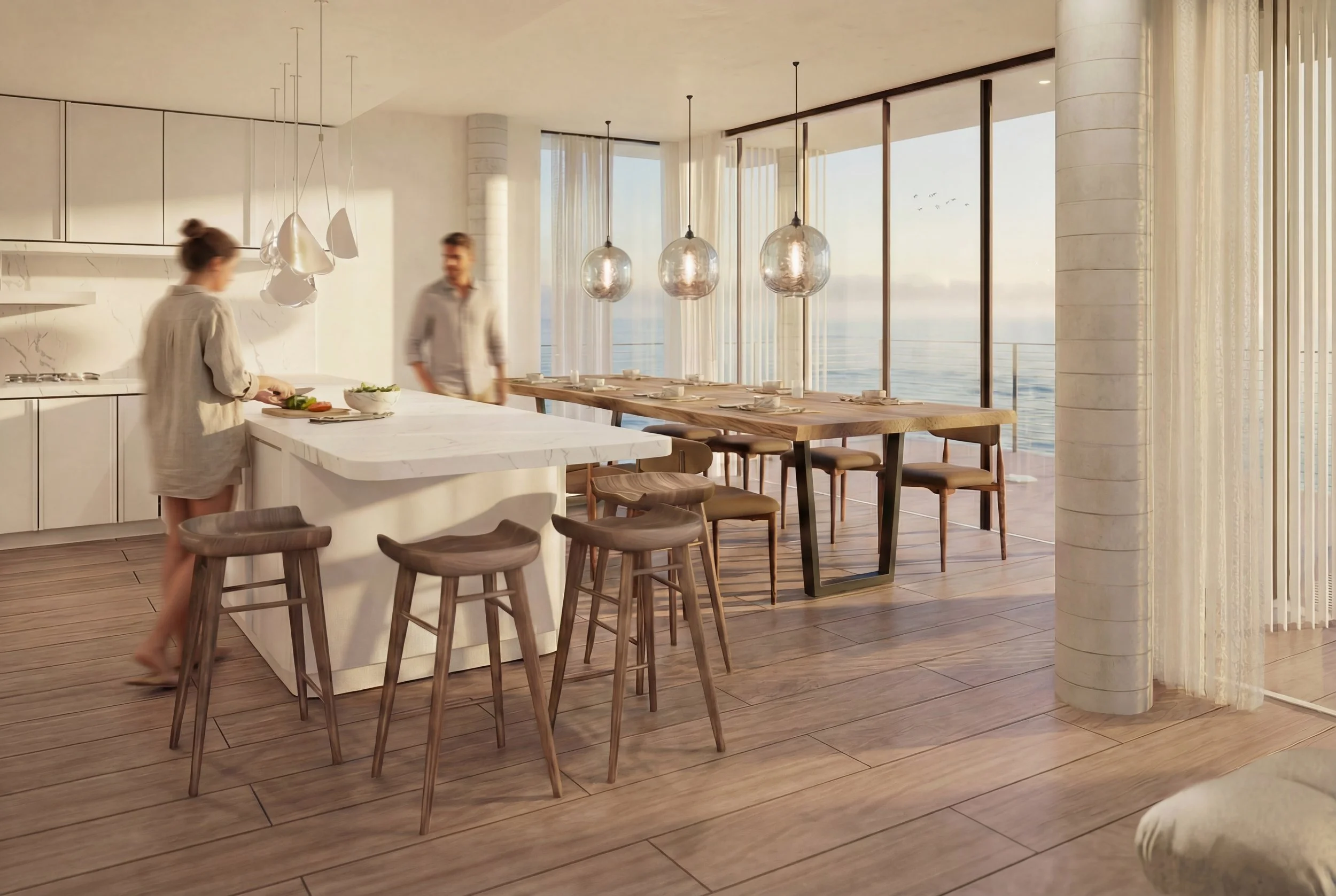
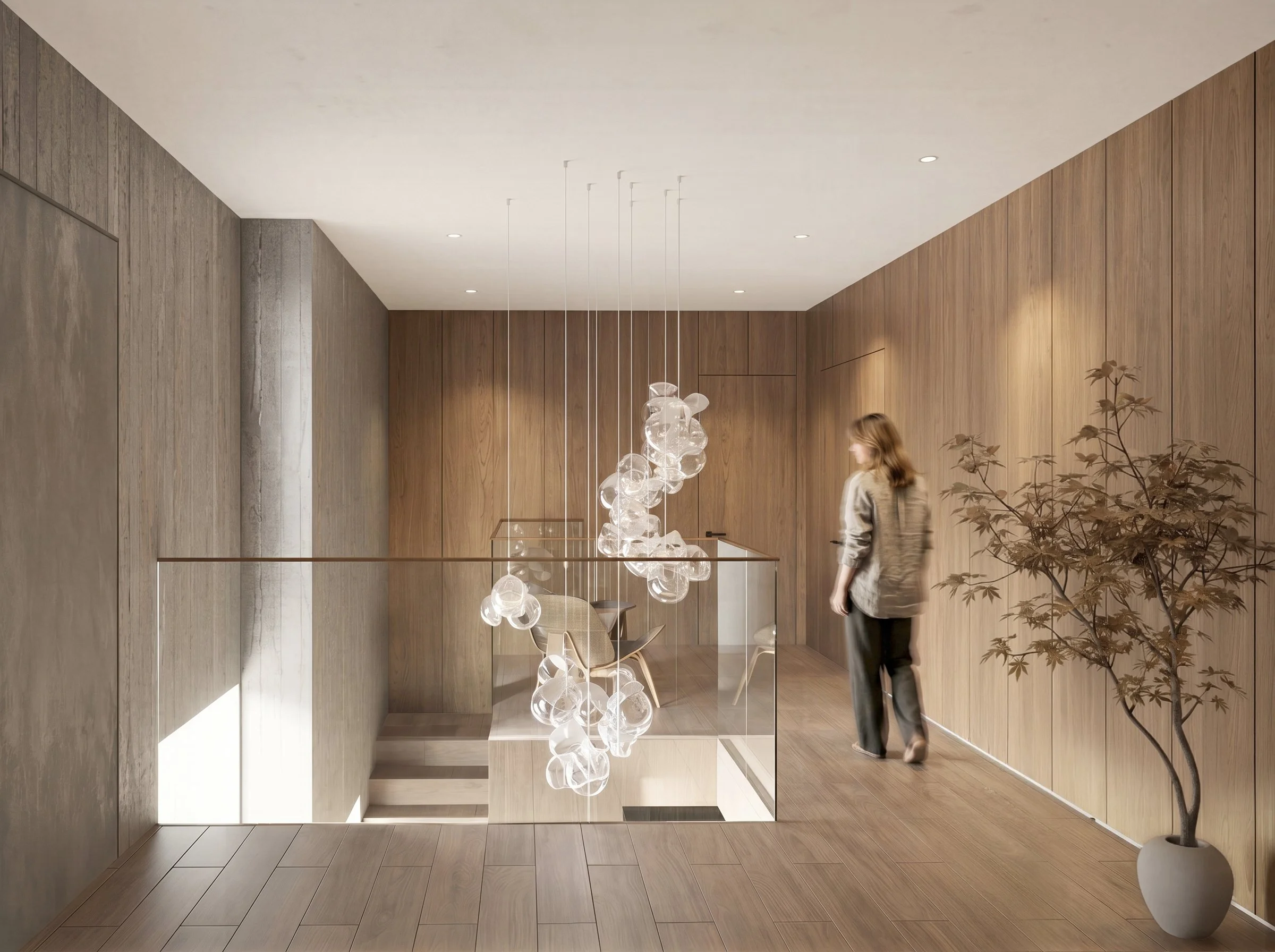
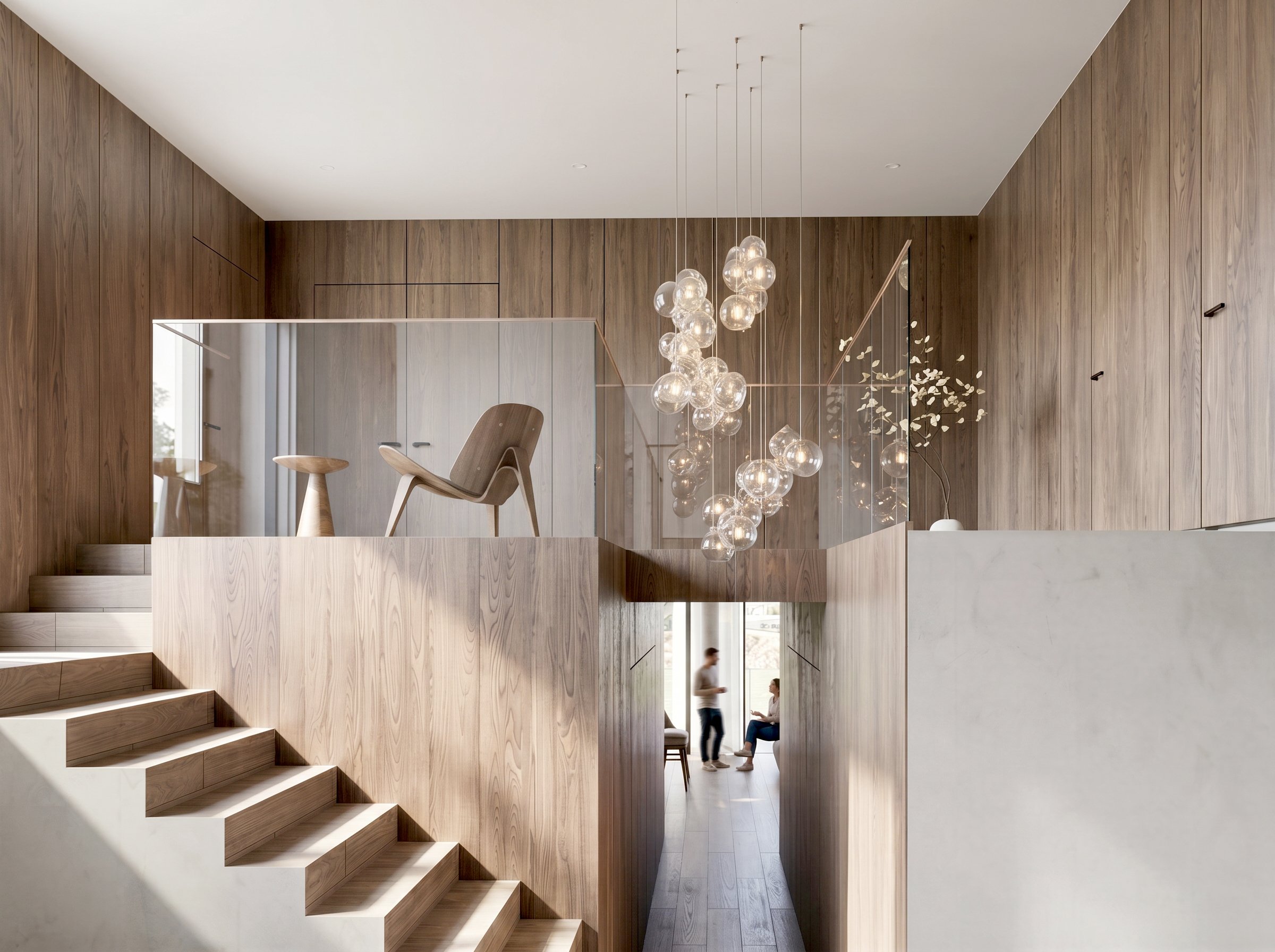
Wooden screens wrap the living spaces, filtering light and view while providing privacy from the beach and highway beyond. When closed, the house feels calm and deliberately inward-looking.
When opened, it dissolves into air, sound, and horizon. The architecture supports both states equally.
Material choices reinforce this flexibility. A resilient structural system anchors the building against coastal and environmental forces, while lighter wood elements bring warmth, tactility, and human scale. Light moves across ceilings and screens throughout the day, marking time quietly rather than dramatically.
This is a house shaped by use rather than image. One that privileges comfort, adaptability, and daily rhythm over fixed expression. Architecture here responds and adjusts over time, settling into the patterns and rhythms of those who live within it.